
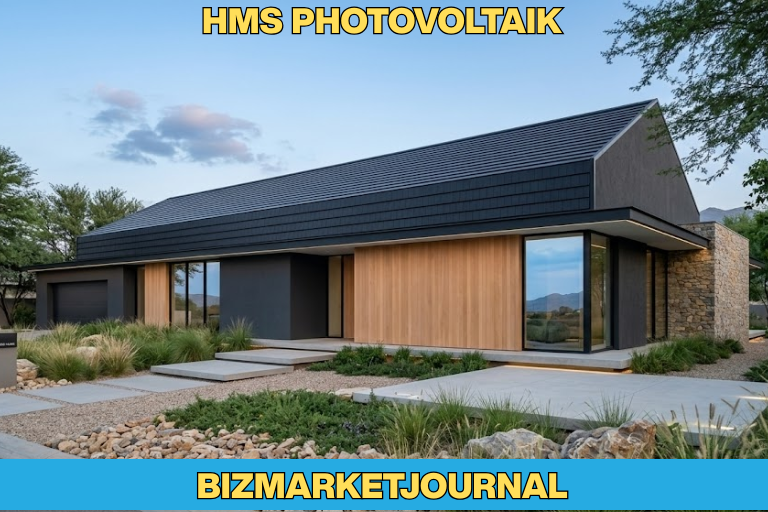
HMS Photovoltaik is a high-efficiency solar energy solution designed to convert sunlight into electricity using advanced photovoltaic (PV) technology. It combines solar panels, inverters, and monitoring systems to deliver sustainable power for residential, commercial, and industrial applications. HMS Photovoltaik systems focus on maximizing energy output while maintaining durability and reliability.
Key Features of HMS Photovoltaik:
- High-efficiency PV modules for optimal sunlight conversion
- Integration with inverters for smooth electricity flow
- Smart monitoring for performance tracking
- Long lifespan with minimal maintenance
Summary:
HMS Photovoltaik provides a complete solar energy solution that is efficient, durable, and suitable for multiple applications.
Key Takeaways:
- Converts sunlight into electricity efficiently
- Combines panels, inverters, and monitoring tools
- Supports sustainable energy use
Pros/Cons:
| Pros | Cons |
| High energy efficiency | Initial installation cost can be high |
| Low maintenance requirements | Requires sunlight exposure for maximum output |
| Scalable for various applications | Needs proper system design for optimal performance |
How HMS Photovoltaik Works
HMS Photovoltaik works by capturing sunlight through solar panels and converting it into electricity using photovoltaic cells. The electricity produced is in direct current (DC) form, which is then converted into alternating current (AC) via an inverter, making it suitable for household and commercial use. Advanced monitoring systems ensure the system operates at peak efficiency.
Step-by-Step Process:
- Sunlight Absorption: Solar panels absorb sunlight through photovoltaic cells.
- DC Electricity Generation: PV cells generate direct current (DC) electricity.
- Inversion to AC: An inverter converts DC electricity into alternating current (AC).
- Power Distribution: AC electricity is supplied to buildings or fed into the grid.
- Monitoring & Optimization: Performance monitoring ensures consistent efficiency.
Summary:
HMS Photovoltaik converts sunlight into usable electricity through an integrated system of panels, inverters, and monitoring devices.
Key Takeaways:
- PV cells convert sunlight into DC electricity
- Inverters make electricity compatible for general use
- Monitoring ensures optimal energy production
Common Mistakes:
- Incorrect panel orientation reducing efficiency
- Skipping regular monitoring and maintenance
- Oversizing or undersizing the system for the building needs

Types of HMS Photovoltaik Systems
HMS Photovoltaik systems come in various types to suit different energy needs and applications. Each type is designed for specific settings, from small residential rooftops to large industrial installations.
Main Types:
- Grid-Tied Systems
- Connected to the public electricity grid
- Surplus energy can be fed back into the grid
- Common for homes and businesses seeking net metering
- Connected to the public electricity grid
- Off-Grid Systems
- Independent of the electricity grid
- Uses battery storage to supply power when sunlight is unavailable
- Ideal for remote locations
- Independent of the electricity grid
- Hybrid Systems
- Combines grid-tied and off-grid features
- Provides backup power during outages
- Balances energy efficiency and reliability
- Combines grid-tied and off-grid features
Summary:
HMS Photovoltaik offers grid-tied, off-grid, and hybrid systems to meet diverse energy requirements.
Key Takeaways:
- Grid-tied: feeds surplus energy back to the grid
- Off-grid: independent energy with battery storage
- Hybrid: combines benefits of both

Pros/Cons:
| System Type | Pros | Cons |
| Grid-Tied | Cost-effective, net metering | No backup during outages |
| Off-Grid | Independent, reliable in remote areas | Higher initial cost, battery maintenance |
| Hybrid | Flexible, backup available | More complex setup |
Advantages and Limitations of HMS Photovoltaik
HMS Photovoltaik provides numerous benefits, but it also has some limitations depending on installation and usage.
Advantages:
- High Energy Efficiency: Advanced PV technology maximizes electricity generation.
- Sustainable & Eco-Friendly: Reduces carbon footprint and reliance on fossil fuels.
- Low Maintenance: Durable components require minimal upkeep.
- Scalable Systems: Suitable for residential, commercial, and industrial installations.
- Cost Savings: Over time, energy bills can decrease significantly.
Limitations:
- High Initial Investment: Installation can be expensive.
- Sunlight Dependency: Efficiency decreases in low sunlight conditions.
- Space Requirements: Large setups require adequate space.
- Technical Expertise Needed: Professional installation ensures optimal performance.
Summary:
HMS Photovoltaik is an efficient and sustainable energy solution but requires proper planning, space, and investment.
Key Takeaways:
- Delivers renewable energy efficiently
- Reduces long-term energy costs
- Installation and sunlight exposure are critical for performance
Common Misconceptions:
- “Solar panels work in any weather equally” – Efficiency depends on sunlight intensity.
- “Maintenance is unnecessary” – Regular checks improve lifespan and output.

Installation Process Step-by-Step
Installing HMS Photovoltaik involves careful planning and execution to ensure optimal performance and safety. The process combines technical precision with proper site assessment.
Step-by-Step Installation:
- Site Assessment: Evaluate sunlight availability, roof structure, and shading.
- System Design: Determine the type of system (grid-tied, off-grid, or hybrid) and size based on energy needs.
- Panel Mounting: Secure solar panels on the roof or ground-mounted frames with correct orientation and tilt.
- Electrical Connections: Install inverters and connect panels to the electrical system.
- Battery Installation (if applicable): Integrate storage systems for off-grid or hybrid setups.
- Monitoring Setup: Install monitoring tools to track energy production and system performance.
- Final Testing: Verify system operation, efficiency, and safety compliance before full operation.
Summary:
HMS Photovoltaik installation requires site assessment, proper system design, safe mounting, electrical setup, and monitoring for efficient energy generation.
Key Takeaways:
- Proper site evaluation maximizes energy output
- Accurate installation ensures safety and efficiency
- Monitoring helps maintain consistent performance
Common Mistakes:
- Ignoring shading and roof orientation
- Incorrect electrical connections
- Skipping monitoring setup
Efficiency, Performance, and Energy Output
HMS Photovoltaik is designed to deliver high efficiency and consistent energy output. Its performance depends on system type, panel quality, and environmental conditions.
Key Performance Metrics:
- Conversion Efficiency: Modern HMS panels achieve 18–22% efficiency.
- Energy Yield: Average annual output varies based on sunlight, system size, and location (kWh/year).
- System Reliability: Durable components ensure long-term operation with minimal degradation.
- Performance Ratio (PR): Measures actual output vs. theoretical maximum; typical PR is 75–85%.
Factors Affecting Efficiency:
- Sunlight intensity and duration
- Panel orientation and tilt
- Temperature and weather conditions
- Quality of inverters and wiring
Summary:
HMS Photovoltaik provides reliable and efficient electricity generation, with performance influenced by sunlight, system setup, and component quality.
Key Takeaways:
- Efficiency ranges between 18–22%
- Proper installation maximizes energy yield
- Monitoring and maintenance sustain long-term performance
Common Misconceptions:
- “All solar panels perform the same” – Efficiency varies by technology and system design.
- “Output is constant year-round” – Seasonal and weather changes affect performance.
Cost Analysis and ROI
HMS Photovoltaik offers long-term savings, but understanding initial costs and return on investment (ROI) is essential for planning.
Cost Components:
- Solar Panels: The largest portion of investment, varying by size and efficiency.
- Inverters: Converts DC to AC; high-quality inverters improve system longevity.
- Installation: Labor, mounting structures, and wiring costs.
- Battery Storage (if applicable): Adds to upfront costs for off-grid or hybrid systems.
- Monitoring Tools: Optional but recommended for efficiency tracking.
ROI Considerations:
- Energy Savings: Reduced electricity bills over time.
- Incentives: Government subsidies, tax credits, and feed-in tariffs.
- Payback Period: Typically 5–10 years, depending on system size, local electricity rates, and sunlight exposure.
Summary:
While HMS Photovoltaik requires upfront investment, long-term energy savings and incentives make it cost-effective over time.
Key Takeaways:
- Initial costs include panels, inverters, installation, and storage
- ROI is influenced by energy savings, incentives, and system efficiency
- Payback period generally ranges from 5 to 10 years
Common Mistakes:
- Underestimating installation and maintenance costs
- Ignoring government incentives
- Oversizing or undersizing the system for actual energy needs
Comparison with Other Photovoltaic Systems
HMS Photovoltaik differs from standard photovoltaic systems in efficiency, durability, and technology integration.
Comparison Table: HMS Photovoltaik vs. Standard PV Systems
| Feature | HMS Photovoltaik | Standard PV Systems |
| Efficiency | 18–22% | 15–18% |
| Durability | High, long lifespan | Moderate |
| Components | Panels, inverters, monitoring | Panels, basic inverters |
| Maintenance | Low | Moderate |
| Suitable Applications | Residential, commercial, industrial | Mostly residential/commercial |
| ROI | Faster due to higher efficiency | Slower |
Summary:
HMS Photovoltaik provides higher efficiency, durability, and better integration than traditional PV systems, making it suitable for a wide range of applications.
Key Takeaways:
- Higher energy conversion rates
- Advanced monitoring and reliability
- Better long-term ROI compared to standard PV
Common Misconceptions:
- “All PV systems are the same” – Technology and components greatly affect performance and ROI.
- “Higher cost means unnecessary expense” – Quality systems offer better long-term value.
Maintenance Tips for HMS Photovoltaik
Proper maintenance ensures HMS Photovoltaik systems operate efficiently and last for decades.
Essential Maintenance Practices:
- Regular Cleaning: Remove dust, dirt, and debris from solar panels to maximize sunlight absorption.
- Visual Inspections: Check panels, wiring, and mounts for damage or corrosion.
- Inverter Monitoring: Ensure the inverter displays normal operation and troubleshoot errors promptly.
- Battery Care (if applicable): Maintain charge cycles and check connections for hybrid/off-grid systems.
- Professional Service: Schedule periodic professional checks for electrical and structural integrity.
Summary:
Routine cleaning, inspections, and monitoring help HMS Photovoltaik maintain high efficiency and extend lifespan.
Key Takeaways:
- Clean panels regularly for optimal sunlight capture
- Monitor inverters and system performance
- Schedule professional inspections periodically
Common Mistakes:
- Ignoring minor panel damage
- Skipping monitoring and diagnostics
- Overlooking battery maintenance in hybrid systems
Future Trends in Photovoltaik Technology
The photovoltaic industry, including HMS Photovoltaik, is rapidly evolving with innovations that increase efficiency, reduce costs, and integrate smart technology.
Emerging Trends:
- Bifacial Solar Panels: Capture sunlight from both sides for higher energy output.
- Perovskite Cells: Promising higher efficiency at lower costs.
- Integrated Storage Solutions: Enhanced battery technologies for off-grid and hybrid systems.
- Smart Monitoring & AI Integration: Real-time performance tracking and predictive maintenance.
- Sustainable Manufacturing: Reduced environmental impact of panel production.
Summary:
Future trends focus on higher efficiency, smart integration, and sustainability, ensuring HMS Photovoltaik systems remain competitive and effective.
Key Takeaways:
- Smart monitoring and AI improve performance
- Emerging materials increase efficiency and reduce costs
- Sustainability is becoming central in photovoltaic technology
Common Misconceptions:
- “Current systems are already perfect” – Ongoing research continues to enhance efficiency and reduce costs.
- “Future tech is too expensive” – Innovations are gradually becoming cost-effective.
Conclusion
HMS Photovoltaik is a high-efficiency solar energy solution suitable for residential, commercial, and industrial applications. Its combination of advanced panels, inverters, and monitoring systems ensures reliable electricity generation, long-term cost savings, and sustainable energy use. By understanding system types, installation, maintenance, and future trends, users can maximize performance and ROI while contributing to renewable energy adoption.
Key Takeaways:
- Converts sunlight into usable electricity efficiently
- Offers multiple system types: grid-tied, off-grid, hybrid
- Requires proper installation and maintenance for optimal performance
- Future trends focus on efficiency, smart technology, and sustainability
FAQs
- What is HMS Photovoltaik?
HMS Photovoltaik is a solar energy solution that converts sunlight into electricity using high-efficiency photovoltaic technology suitable for homes, businesses, and industrial applications. - How efficient is HMS Photovoltaik?
Efficiency ranges between 18–22%, depending on sunlight, panel type, and system setup. - How much does HMS Photovoltaik cost?
The cost varies by system size, type, and components but typically has a payback period of 5–10 years with energy savings and incentives. - How is HMS Photovoltaik installed?
Installation involves site assessment, system design, panel mounting, electrical connections, battery integration (if needed), and monitoring setup. - What are the types of HMS Photovoltaik systems?
Three main types: Grid-tied, Off-grid, and Hybrid systems, each suited for different energy needs and locations. - What maintenance is required?
Regular cleaning, inspections, inverter monitoring, battery care, and periodic professional checks are recommended. - What are future trends in HMS Photovoltaik technology?
Emerging trends include bifacial panels, perovskite cells, AI monitoring, integrated storage, and sustainable manufacturing.
References
- Fraunhofer Institute for Solar Energy Systems – Photovoltaic Research Reports
- International Electrotechnical Commission (IEC) – PV Module Standards IEC 61215 & IEC 61730
- Solar Energy Industries Association (SEIA) – PV System Guidelines
- HMS Solar Official Documentation – Technical Specifications and Installation Manuals
- Renewable Energy World – Trends and Innovations in Solar Technology
- National Renewable Energy Laboratory (NREL) – Solar Performance Metrics
- Industry Case Studies – ROI and Efficiency of High-Efficiency PV Systems
 Muhammad Rehan Khalil