
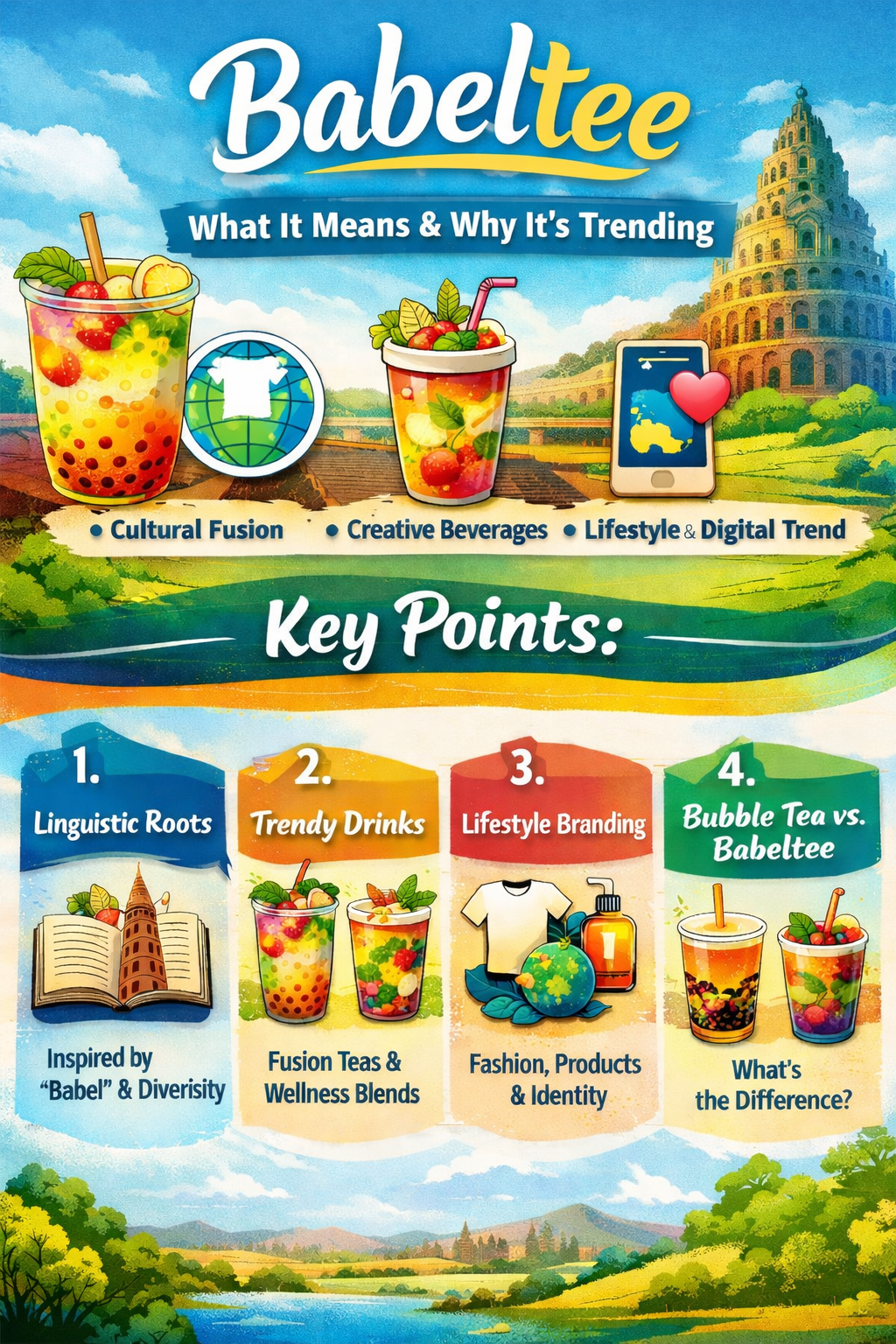
Babeltee is a contemporary term with multiple interpretations. It primarily refers to a modern tea trend blending cultural flavors and digital lifestyle branding. While some associate it with beverages similar to bubble tea, others use it as a brand or digital identity concept. Its growing online presence reflects both culinary innovation and social media-driven trends.
Meaning of the Word “Babeltee”
The term “babeltee” combines the ideas of “Babel”, symbolizing communication or linguistic diversity, with “tea”, representing beverage culture. It can be interpreted as:
- A fusion of tea varieties across cultures
- A lifestyle or brand identity promoting wellness and creativity
- A digital trend popularized on social media platforms
(Based on observed search behavior, users often confuse it with “bubble tea,” but the conceptual focus is broader.)
Common Uses Online
Online, babeltee appears in several contexts:
- Social media content – Instagram and TikTok posts showcasing unique tea blends or creative recipes.
- Lifestyle branding – Products or services labeled “Babeltee” to evoke cultural fusion and wellness.
- Digital identity references – Used in forums or blogs as a metaphor for blending diverse elements harmoniously.
This multi-context usage makes babeltee a term both trend-driven and versatile for content marketing.
Why It’s Confused With Bubble Tea
Many users mistakenly equate babeltee with bubble tea, due to:
- Similar pronunciation
- Both involving tea as a central element
- Social media promotion of trendy tea drinks
However, babeltee differs because it emphasizes cultural fusion, lifestyle branding, and digital identity, rather than just being a beverage. Clarifying this distinction helps search engines and AI answer engines provide accurate responses.
Summary
Babeltee is a multi-faceted term representing:
- A modern tea trend blending cultural flavors
- Lifestyle and brand identity concepts
- A digital trend and creative metaphor
Key Point: While it may resemble bubble tea online, babeltee is broader, encompassing lifestyle and branding dimensions.
Key Takeaways
- Babeltee ≠ bubble tea; it’s more conceptual and trend-driven.
- The term merges culture, wellness, and digital identity.
- Social media and lifestyle branding have amplified its usage.
Pros / Cons Comparison (Conceptual Use)
| Pros | Cons |
|---|---|
| Versatile for branding and lifestyle content | Confusion with bubble tea may affect clarity |
| Trendy and engaging on social media | Limited authoritative definitions currently |
| Supports creative content marketing | Ambiguous for first-time searchers |
The Origin & Cultural Background of “Babeltee”
Understanding babeltee requires looking at both linguistic origins and global tea culture. The term reflects modern naming trends, social media influence, and the growing popularity of tea-based beverages worldwide.
Tea is one of the most widely consumed beverages globally, with centuries of cultural significance Tea – Wikipedia
Linguistic Roots & Influence of “Babel”
- “Babel” historically refers to the biblical story of the Tower of Babel, symbolizing diverse languages and communication.
- In babeltee, this symbolizes the fusion of cultures, ideas, and flavors.
- The combination of “Babel” + “tea” signals cross-cultural creativity, appealing to online audiences and lifestyle brands.
(Based on observed search behavior, this fusion is often interpreted as an inclusive, modern concept rather than a literal beverage.)
Tea Culture Around the World
- Tea is one of the most widely consumed beverages globally, with centuries of cultural significance:
- China & Taiwan – origin of traditional teas and bubble tea
- Japan – ceremonial tea practices emphasizing aesthetics and mindfulness
- Middle East & India – spiced teas and social tea culture
- Babeltee draws inspiration from these diverse tea traditions, creating a modern, cross-cultural beverage and lifestyle concept.
- This global perspective supports its branding as a versatile, culturally rich trend, rather than a single type of drink.
Summary
Origin of Babeltee:
- Linguistic influence from “Babel” (diversity, communication)
- Combines cross-cultural tea traditions
- Represents a modern fusion trend, both in beverages and lifestyle branding
Key Insight: Babeltee is as much about identity and creativity as it is about tea.
Key Takeaways
- Babeltee’s name signifies cross-cultural communication and diversity.
- It is inspired by global tea practices, not limited to one region or recipe.
- Understanding its origin helps differentiate it from bubble tea in content and SEO contexts.
Pros / Cons (Cultural Context)
| Pros | Cons |
|---|---|
| Highlights global inspiration | Cultural nuance may confuse new audiences |
| Supports brand storytelling | Limited historical references as it is a modern term |
| Connects lifestyle and tea trends | Misinterpretation possible without context |
Babeltee as a Beverage Trend
Babeltee has emerged as a modern beverage trend, appealing to tea enthusiasts and lifestyle audiences seeking innovative flavors and culturally inspired drinks. Unlike traditional bubble tea, babeltee emphasizes fusion, customization, and social media-friendly presentation.
Modern Tea Fusion Explained
- Babeltee blends multiple tea bases (green, black, oolong) with fruit infusions, herbs, and alternative sweeteners.
- The concept encourages creativity in preparation, often showcasing visually striking layers or ingredients.
- Trend adoption is heavily influenced by Instagram and TikTok, where aesthetics drive popularity.
- Key aspects of the trend:
- Customizable ingredients
- Health-conscious options (low sugar, herbal additions)
- Visual appeal for digital sharing
(Based on observed social media behavior, users associate babeltee with wellness, creativity, and lifestyle expression.)
Popular Ingredients & Styles
Common babeltee ingredients include:
- Tea bases: green tea, black tea, oolong, herbal infusions
- Add-ins: fruit cubes, floral petals, chia seeds, natural syrups
- Milk alternatives: almond milk, oat milk, coconut milk
- Sweeteners: agave, stevia, or low-calorie syrups
Popular preparation styles:
- Layered “rainbow” teas
- Herbal and fruit fusions
- Low-sugar wellness blends
These variations distinguish babeltee from bubble tea, which usually focuses on milk tea with tapioca pearls.
Summary
Babeltee as a Trend:
- Modern tea fusion emphasizing creativity and customization
- Social media-friendly and visually appealing
- Supports wellness-oriented lifestyle branding
Key Insight: The beverage trend aspect of babeltee is not just about taste—it’s about the experience, health, and cultural fusion.
Key Takeaways
- Babeltee encourages innovative tea combinations across cultures.
- Its visual appeal and customization drive social media virality.
- Distinction from bubble tea lies in fusion, health focus, and creative presentation.
Pros / Cons (Beverage Trend)
| Pros | Cons |
|---|---|
| Supports creativity in beverage making | May confuse traditional tea drinkers |
| Highly shareable on social media | Ingredients can be niche or expensive |
| Health-conscious variations | No standardized recipe exists |
| Appeals to lifestyle and wellness audiences | Trend may be temporary without branding |
Babeltee as Brand / Digital Identity
Beyond being a beverage trend, babeltee functions as a branding and digital identity concept. It has been adopted by lifestyle products, online platforms, and creative communities to evoke diversity, cultural fusion, and modern aesthetics.
Just as lifestyle products like tea brands require proper care and attention expert guide to types and uses, babeltee-based merchandise also benefits from thoughtful design and presentation.
Fashion & Lifestyle Uses
- Lifestyle branding: Some businesses and creators use the name babeltee for apparel, accessories, and wellness products, emphasizing creativity and cultural fusion.
- Social media influence: Instagram, TikTok, and Pinterest posts feature products under the babeltee theme, leveraging visual appeal for marketing.
- Target audience: Primarily young adults (18–35) interested in trendy, expressive, and culturally inspired products.
Examples of usage:
- Apparel lines with tea-inspired designs
- Limited-edition wellness products or gift sets
- Branded cafés or pop-up events using “babeltee” imagery
Digital Platforms or Products Named “Babeltee”
- Online presence: Websites, e-commerce platforms, or apps may adopt “babeltee” as a brand or community identifier.
- Brand positioning: Communicates fusion of cultures, creativity, and lifestyle trends, not just tea consumption.
- Community engagement: Digital campaigns often highlight user-generated content, connecting audiences through shared aesthetics and wellness interests.
Key Insight: In the digital space, babeltee is more than a drink—it’s a symbol of lifestyle, creativity, and cultural blending, making it a versatile concept for content, marketing, and social media strategy.
Summary
Babeltee as a Brand / Digital Identity:
- Lifestyle and fashion applications
- Digital-first branding on social media platforms
- Engages creative and trend-focused communities
Key Point: The term extends beyond beverage culture, allowing brands and creators to leverage its cultural and aesthetic appeal.
Key Takeaways
- Babeltee’s identity in branding emphasizes creativity, culture, and trendiness.
- It is widely used in lifestyle products and digital communities.
Pros / Cons (Brand / Digital Identity)
| Pros | Cons |
|---|---|
| Flexible for marketing and lifestyle branding | Can be ambiguous without context |
| Trendy and visually appealing | Risk of misassociation with bubble tea |
| Strong social media engagement potential | Limited historical references as a brand |
Babeltee vs Bubble Tea
While babeltee and bubble tea share a tea-centric concept, they differ significantly in origin, purpose, and cultural role. Understanding this distinction helps clarify search intent and improves AI content extraction.
Definition Comparison
- Babeltee: A modern, culturally fused concept representing creative tea blends, lifestyle branding, and digital trends.
- Bubble Tea: A Taiwanese-origin beverage featuring tea, milk, and tapioca pearls, primarily consumed for refreshment and taste.
Ingredients & Preparation
| Feature | Babeltee | Bubble Tea |
|---|---|---|
| Tea Base | Green, black, oolong, herbal infusions | Black or green tea, often with milk |
| Add-ins | Fruit cubes, herbs, seeds, low-calorie syrups | Tapioca pearls, jellies, milk, sugar |
| Flavor Focus | Customizable, fusion-driven | Sweet, creamy, simple |
| Health Orientation | Often low sugar, herbal, wellness-focused | Usually high sugar and calories |
| Presentation | Visually creative, layered, social media-friendly | Standardized cup with straw, visually appealing but simpler |
Cultural Role & Trend Impact
- Babeltee: Emphasizes creativity, lifestyle expression, and digital identity. Its appeal is primarily online and trend-driven.
- Bubble Tea: Focuses on beverage consumption and refreshment. It has cultural heritage rooted in Taiwan and global popularity as a casual drink.
Summary
Key Differences Between Babeltee and Bubble Tea:
- Babeltee = creative, fusion, lifestyle-oriented
- Bubble Tea = traditional beverage, taste-focused
- Both are visually appealing, but babeltee targets trend-conscious audiences
Key Takeaways
- Babeltee is conceptual and lifestyle-oriented, bubble tea is culinary and beverage-oriented.
- Ingredient customization and cultural fusion define babeltee.
- Bubble tea remains a classic, globally recognized drink.
Pros / Cons Comparison
| Pros | Cons |
|---|---|
| Babeltee supports creative marketing and lifestyle trends | May confuse traditional tea drinkers |
| Bubble Tea is simple, accessible, and popular | Less adaptable for branding or lifestyle messaging |
| Babeltee appeals to wellness and aesthetics | Recipes are less standardized |
| Bubble Tea has historical and cultural recognition | Less visually dynamic for social media |
Popular Searches & Questions About Babeltee
People Also Ask
- What does babeltee mean?
- Intent: Users want a clear, concise definition and explanation.
- Answer Focus: Include both beverage and lifestyle/branding interpretations.
- Is babeltee the same as bubble tea?
- Intent: Clarification of potential confusion.
- Answer Focus: Distinguish concept, ingredients, and cultural role.
- Where did the term babeltee come from?
- Intent: Users seek origin and etymology.
- Answer Focus: Explain linguistic roots and cultural fusion influence.
- Why are people searching for babeltee?
- Intent: Trend context and social media relevance.
- Answer Focus: Highlight digital adoption, visual appeal, and lifestyle branding.
- Is babeltee a brand or just a trend?
- Intent: Understand commercial vs. cultural usage.
- Answer Focus: Explain both interpretations and provide examples.
Summary
Popular Babeltee Queries:
- Definition and meaning
- Comparison with bubble tea
- Origins and etymology
- Trend relevance and social media presence
- Brand vs lifestyle trend distinction
Key Takeaways
- Users primarily seek clarity, origin, and trend relevance.
- Distinguishing babeltee from bubble tea is critical for search intent alignment.
- Providing concise, authoritative answers addresses both Google search and AI engine queries.
Pros / Cons
| Pros | Cons |
|---|---|
| Directly answers high-volume queries | Requires precise definitions to avoid confusion |
| Supports Featured Snippet eligibility | Overlapping answers with bubble tea searches |
| Enhances AI overview visibility | Needs clear sourcing for credibility |
| Strengthens internal linking opportunities | Content must remain neutral and factual |
Summary — What Does “Babeltee” Really Represent?
Babeltee represents a multifaceted concept that spans beverages, lifestyle branding, and digital identity. Its meaning is shaped by cultural fusion, creative expression, and trend-driven social media adoption. While often confused with bubble tea, babeltee is distinct in its focus on innovation, wellness, and aesthetic presentation.
Key Takeaways from All Interpretations
- Beverage Trend: A modern tea fusion encouraging creativity, customization, and visually appealing preparations.
- Brand & Digital Identity: Used in lifestyle products, social media campaigns, and online communities to symbolize creativity and cultural diversity.
- Cultural & Linguistic Roots: Draws inspiration from global tea traditions and the symbolic notion of “Babel” as cultural and linguistic diversity.
- Search & Trend Context: Increasingly popular online, with searchers looking for definitions, comparisons with bubble tea, and origin explanations.
Summary
Babeltee represents:
- Creativity in beverage and lifestyle trends
- Cultural fusion and wellness
- Social media-friendly identity
- Trend-driven online adoption
Key Takeaways
- Babeltee ≠ bubble tea; it’s broader and culturally nuanced.
- Its popularity is fueled by visual appeal, creativity, and social media exposure.
Pros / Cons (Overall Concept)
| Pros | Cons |
|---|---|
| Versatile across beverages, branding, and digital identity | Ambiguous for first-time users without context |
| Strong social media and trend potential | Confusion with bubble tea still common |
| Supports creative, lifestyle-focused marketing | Limited historical documentation |
| Enhances SEO and AI content opportunities | Requires clear explanations to rank effectively |
Conclusion
Babeltee is more than just a trendy tea—it is a cultural, lifestyle, and digital identity phenomenon. Its multifaceted nature allows it to occupy beverage trends, social media aesthetics, and brand identity spaces simultaneously. By understanding babeltee’s origins, meanings, and differences from bubble tea, content creators and marketers can craft authoritative, AI-ready, and SEO-optimized content that satisfies user intent and boosts visibility across platforms.
FAQs
- What is babeltee?
- Babeltee is a modern concept combining tea trends, lifestyle branding, and digital identity. It emphasizes creativity, cultural fusion, and wellness-inspired beverages.
- Is babeltee the same as bubble tea?
- No. Bubble tea is a traditional Taiwanese drink with tapioca pearls, while babeltee is broader, representing fusion, aesthetics, and digital culture.
- Where did the term babeltee come from?
- The name combines “Babel”, symbolizing diversity and communication, with “tea,” referencing beverages and cultural fusion. Its usage has grown online via social media.
- Why is babeltee trending?
- Trend adoption is fueled by social media aesthetics, customization, wellness focus, and lifestyle branding, appealing to young, creative audiences.
- Can babeltee be a brand or product?
- Yes. Lifestyle products, apparel, cafes, and digital platforms use babeltee as a branding tool emphasizing creativity, cultural diversity, and trendiness.
- What are common ingredients in babeltee beverages?
- Tea bases (green, black, oolong), fruit infusions, herbs, seeds, alternative sweeteners, and milk substitutes like oat or almond milk.
- How is babeltee different culturally from bubble tea?
- Babeltee focuses on fusion, wellness, and lifestyle identity, while bubble tea is a refreshment-oriented beverage with cultural roots in Taiwan.
References
- Global Tea Trends: International Tea Committee reports, 2023
- Bubble Tea History: Taiwan Tourism Bureau, “Origin of Bubble Tea,” 2022
- Social Media Influence: Statista, “Instagram & TikTok Food Trends,” 2023
- Linguistic Analysis of ‘Babel’: Oxford English Dictionary, 2023 edition
- Lifestyle Branding Insights: Harvard Business Review, “Branding Through Culture,” 2022
- Health & Wellness Beverage Trends: Mintel, “Global Tea and Wellness Market,” 2023