The North Slope tundra is a fragile yet highly interconnected ecosystem where energy flows from simple producers to apex predators. Understanding the Tundra Food Web and Tundra Food Chain is critical for both ecological study and Iñupiat subsistence planning in the North Slope Borough. Each organism, from lichen to polar bear, plays a role in sustaining the balance of this extreme environment.
Primary Producers: Lichen, Moss, and Permafrost Flora
Primary producers form the foundation of the Arctic food system:
- Lichen: A symbiotic organism thriving in nutrient-poor soils; key energy source for Caribou and reindeer.
- Moss: Provides insulation to the permafrost and serves as a minor herbivore food source.
- Permafrost Flora: Tundra grasses and small flowering plants emerge briefly during summer, enabling energy transfer up the food chain.
The 2026 “browning” trend highlights permafrost degradation, reducing plant productivity, which can affect herbivore survival and downstream predator populations.
Primary and Secondary Consumers
Herbivores and omnivores are the next level of energy transfer:
- Caribou (Teshekpuk & Western Arctic herds): Keystone herbivore, feeding on lichen and moss; primary protein source for humans.
- Lemmings: Small mammals supporting owls, foxes, and weasels; their population cycles influence predator abundance.
- Arctic Fox & Ravens: Omnivores feeding on carrion, eggs, and small rodents, linking primary consumers to higher trophic levels.
Primary vs Secondary Consumer Energy Exchange – highlights calories transferred, seasonal availability, and predator dependence.
Apex Predators and Keystone Species
Apex predators regulate the tundra ecosystem:
- Polar Bears: Depend on seals and occasionally scavenge carcasses of herbivores; their presence stabilizes prey populations.
- Wolves: Hunt Caribou and smaller mammals, maintaining herbivore balance.
- Snowy Owls: Seasonal predators of lemmings; their abundance reflects small mammal cycles.
These predators are sensitive to ecosystem changes, including prey fluctuations and climate-induced habitat shifts. Preserving apex species ensures ecological balance and supports human subsistence strategies.
Summary
The North Slope tundra food web demonstrates intricate energy flow from lichen and moss to apex predators. Both ecological stability and Iñupiat subsistence rely on maintaining these relationships. Understanding each trophic level clarifies why the Tundra Food Web is vital for ecosystem management and food security.
Key Takeaways
- Lichen and moss are foundational producers supporting Caribou and small herbivores.
- Keystone species like Caribou and Lemmings regulate energy flow.
- Apex predators stabilize populations and influence ecosystem health.
- The “browning” effect from permafrost thaw threatens food web stability.
- Effective subsistence planning relies on understanding predator-prey interactions.
Pros/Cons: Biological Resilience vs Environmental Fragility
| Factor | Biological Resilience | Environmental Fragility |
|---|---|---|
| Species Diversity | Moderate | Sensitive to loss |
| Energy Flow | Efficient in summer | Limited in winter |
| Adaptation | Seasonal migrations | Vulnerable to climate change |
| Human Dependence | Supports subsistence | Disruption affects survival |
| Recovery | Slow but possible | Sensitive to permafrost thaw |
Common Misconceptions
- “The tundra is a barren wasteland with no food.” False – it supports a complex food web essential to wildlife and humans.
- “Apex predators can survive without herbivores.” False – predator populations depend directly on prey availability.
- “All tundra food chains are simple.” False – interconnections are intricate and sensitive to seasonal and climate changes.

The Arctic Food Chain: Energy Transfer in Extreme Cold
The Arctic food chain in the North Slope Borough exemplifies how energy moves through an ecosystem under extreme environmental constraints. From primary producers to apex predators, each trophic level is adapted to short growing seasons, frigid temperatures, and nutrient-poor soils. Understanding this energy transfer is critical for both ecological research and Iñupiat subsistence practices in 2026.
Trophic Levels Overview
Energy flows through defined levels:
- Producers: Lichen, moss, tundra grasses, and small flowering plants capture solar energy during the brief Arctic summer.
- Primary Consumers: Caribou, lemmings, and herbivorous insects convert plant energy into biomass.
- Secondary Consumers: Arctic foxes, snowy owls, and ravens feed on herbivores, regulating prey populations.
- Tertiary/Quaternary Consumers: Wolves, polar bears, and humans occupy the highest levels, exerting top-down influence on the food web.
The Tundra Trophic Levels – highlighting energy input, seasonal variations, and biomass transfer efficiency between each trophic level.
Seasonal Energy Flux
Energy availability in the Arctic varies dramatically:
- Summer: High plant productivity allows herbivores to gain weight, providing sufficient prey for predators.
- Winter: Limited sunlight, snow cover, and frozen permafrost reduce producer biomass, stressing herbivores and indirectly affecting apex predators.
- Impact of Thawing Permafrost: Changes in soil nutrients and plant availability influence energy flow and reduce the predictability of food chains.
Seasonal fluctuations directly affect Iñupiat subsistence planning, determining hunting success and stored food availability in Siġluaq ice cellars.
Human & Wildlife Interactions
Humans are integrated into the Arctic food chain:
- Iñupiat Subsistence Hunting: Focuses on caribou, Arctic char, and seal, directly linking human nutrition to local ecosystems.
- Wildlife Management: Alaska Department of Fish and Game monitors species populations, ensuring sustainable hunting practices.
- Energy Dependence: Human communities rely on stable herbivore populations, which in turn depend on robust producer levels.
This interconnectedness underscores why maintaining trophic stability is vital for both ecosystem resilience and human survival in the North Slope.
Summary
The Arctic food chain demonstrates precise energy transfer across producers, consumers, and apex predators. Seasonal and climate variability shape trophic efficiency, while human subsistence practices depend on healthy herbivore populations and ecosystem stability.
Key Takeaways
- Energy flows from tundra producers to apex predators and humans.
- Seasonal variations dramatically affect herbivore and predator survival.
- Thawing permafrost disrupts nutrient availability and energy transfer.
- Human subsistence is directly linked to trophic stability.
- Monitoring by wildlife authorities ensures sustainable resource use.
Pros/Cons: Primary vs Secondary Consumer Energy Exchange
| Factor | Primary Consumers | Secondary Consumers |
|---|---|---|
| Energy Intake | Moderate | High dependence on prey populations |
| Seasonal Survival | Vulnerable in winter | Sensitive to herbivore abundance |
| Ecological Role | Biomass conversion | Predator regulation |
| Human Dependence | High (caribou) | Indirect (predators) |
| Vulnerability | Sensitive to plant scarcity | Sensitive to prey cycles |
Common Misconceptions
- “Energy transfer in the Arctic is straightforward.” False – the food chain is dynamic and highly influenced by seasonal and climate changes.
- “Humans are separate from the food web.” False – Iñupiat rely directly on herbivores and fish within the ecosystem.
- “Winter halts all energy flow.” False – frozen resources and stored biomass maintain limited energy transfer year-round.

Traditional Iñupiat Tundra Foods: Survival in the North Slope
The Iñupiat people of North Slope Borough have relied on the tundra’s natural resources for centuries. Understanding Tundra Food, the Tundra Food Chain, and subsistence strategies is essential for appreciating how humans coexist with the Arctic ecosystem. Their diet is adapted to extreme cold, seasonal availability, and the delicate balance of the North Slope food web.
Key Food Sources
Iñupiat diets emphasize nutrient-dense, high-calorie foods sourced directly from the tundra:
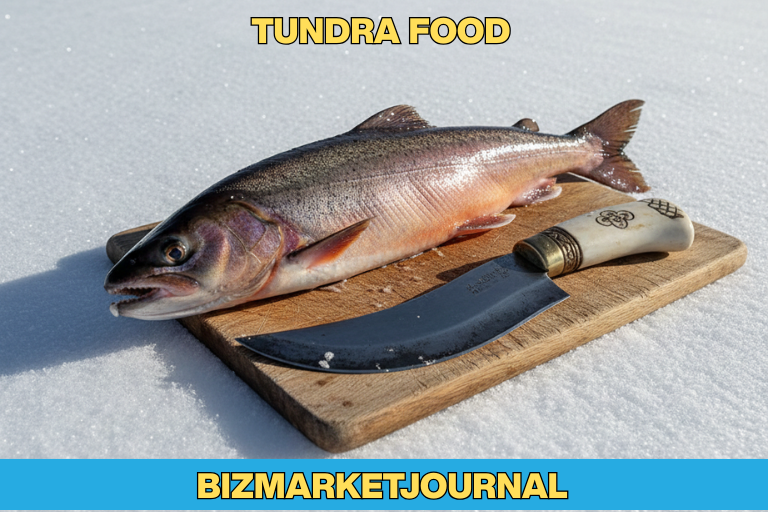
- Caribou (Teshekpuk & Western Arctic herds): Primary protein source; provides meat, hides, and marrow.
- Arctic Char and Salmon: Seasonal fish harvested from rivers and coastal waters.
- Seal and Walrus: Rich in fat and essential omega-3 fatty acids, critical for winter survival.
- Berries and Arctic Plants: Crowberry, cloudberry, and tundra greens provide vitamins and minerals.
Caribou and Arctic Char provide essential protein for Iñupiat communities, ensuring survival during harsh winters. For those interested in high-protein diets in other contexts, see our guide on High Protein Low Calorie Fast Food – Ultimate LA Guide to explore modern, protein-rich alternatives.
Seasonal Subsistence Calendar
Food availability follows predictable seasonal patterns:
Seasonal Subsistence Calendar
| Month | Food Source | Availability | Preparation / Storage |
|---|---|---|---|
| June–July | Arctic Char | Rivers & streams | Fresh, smoked, or dried |
| August–September | Berries | Tundra patches | Frozen or preserved |
| September–October | Caribou | Herd migrations | Fresh, dried, or stored in Siġluaq |
| October–March | Seal / Walrus | Coastal ice | Stored in ice cellars or fresh for short periods |
This calendar helps communities optimize harvests while preserving ecological balance.
Siġluaq (Ice Cellars) and Food Preservation
Siġluaq, traditional ice cellars, are critical for winter storage:
- Maintains low temperatures for long-term preservation of meat, fish, and fat.
- Thawing permafrost (2026 climate impact) threatens structural stability, forcing adaptation.
- Modern adaptations include improved insulation and community-shared storage facilities.
These ice cellars illustrate the intersection of tundra ecology and human ingenuity, ensuring food security through extreme winters.
Summary
Iñupiat survival relies on a combination of seasonal harvesting, knowledge of the tundra food web, and effective preservation strategies like Siġluaq. These practices highlight the balance between ecological sustainability and human nutrition in the North Slope.
Key Takeaways
- Caribou, Arctic Char, seal, and berries form the core Iñupiat food sources.
- Seasonal harvesting aligns with the tundra’s natural cycles.
- Ice cellars preserve protein and fat through extreme winters.
- TEK (Traditional Ecological Knowledge) is central to subsistence planning.
- Human survival depends on careful monitoring of local wildlife populations.
Pros/Cons: Biological Abundance vs Human Reliance
| Factor | Biological Abundance | Human Reliance |
|---|---|---|
| Resource Availability | Seasonal and variable | Critical for survival |
| Adaptation Needs | Species migrate | Harvest timing, storage methods |
| Nutritional Value | High for predator & herbivore | Essential for winter energy |
| Vulnerability | Climate-sensitive | Direct impact from ecosystem changes |
| Recovery | Slow in fragile tundra | Contingent on wildlife management |
Common Misconceptions
- “The tundra provides no edible plants.” False – berries and tundra greens supplement diets.
- “Iñupiat subsistence is outdated.” False – it remains adaptive and central to community food security.
- “All protein comes from hunting large mammals.” False – fish, small mammals, and marine mammals also contribute significantly.

Climate Impact 2026: How Thawing Permafrost Affects Food Security
The North Slope tundra faces unprecedented changes in 2026 due to rising temperatures and thawing permafrost. These environmental shifts affect both the Tundra Food Web and Iñupiat subsistence practices, highlighting the interconnectedness of ecological stability, predator-prey dynamics, and human food security in the North Slope Borough.
Browning of Arctic Food Webs
- Definition: The “browning” effect refers to a shift from green, plant-based productivity toward reduced biomass and increased fungal or decomposed matter.
- Impact on Herbivores: Reduced lichen and tundra vegetation limits Caribou and Lemming populations.
- Cascading Effects: Predators like Wolves and Polar Bears face prey scarcity, altering hunting patterns and survival rates.
- Implications for Humans: Lower herbivore abundance directly impacts the availability of primary protein sources for subsistence communities.
Caribou Population Stability
Caribou remain the keystone species for both wildlife and human subsistence:
- Herd migrations are increasingly unpredictable due to permafrost melt, snow cover changes, and forage scarcity.
- 2026 surveys indicate some herd populations are stable, but localized declines are reported near thaw-affected regions.
- Continuous monitoring by the Alaska Department of Fish and Game ensures adaptive management to preserve both ecological and cultural food security.
Adaptation Strategies
Communities and wildlife managers implement adaptive strategies to mitigate climate effects:
- TEK-Guided Hunting: Adjusting hunting schedules based on local environmental cues to optimize success.
- Enhanced Ice Cellars (Siġluaq): Reinforced storage structures counter permafrost instability.
- Community Resource Management: Shared knowledge and coordinated hunting practices ensure equitable access to limited resources.
- Wildlife Monitoring Programs: Track population shifts in Caribou, Lemmings, and apex predators to inform subsistence planning.
Summary
Thawing permafrost in 2026 disrupts tundra ecosystems, affecting herbivore populations, predator dynamics, and human food security. Proactive adaptation through TEK, monitoring, and innovative storage methods maintains both ecological resilience and Iñupiat subsistence reliability.
Key Takeaways
- The Arctic “browning” effect reduces plant productivity, impacting herbivores and apex predators.
- Caribou stability is central to both ecosystem balance and human nutrition.
- TEK-guided hunting and reinforced ice cellars mitigate permafrost-related challenges.
- Seasonal unpredictability requires adaptive community management.
- Climate-induced changes highlight the sensitivity of North Slope food webs.
Pros/Cons: Biological Resilience vs Environmental Fragility
| Factor | Biological Resilience | Environmental Fragility |
|---|---|---|
| Plant Productivity | Can recover in summer | Reduced by thawing permafrost |
| Herbivore Populations | Seasonal recovery possible | Vulnerable to forage scarcity |
| Apex Predators | Adaptable | Sensitive to prey decline |
| Human Subsistence | Flexible with TEK | Directly impacted by resource shortages |
| Ecosystem Recovery | Slow but feasible | Rapid environmental changes increase vulnerability |
Common Misconceptions
- “Permafrost thaw only affects soil.” False – it impacts plant growth, animal food sources, and human storage methods.
- “Caribou populations are immune to climate change.” False – migration and forage availability are climate-sensitive.
- “Subsistence practices cannot adapt.” False – TEK and modern adaptive strategies help maintain food security.
Conclusion
The tundra ecosystem of Alaska’s North Slope Borough demonstrates a delicate balance between ecological processes and human subsistence. From lichen and moss forming the base of the Tundra Food Web to Caribou, Lemmings, and apex predators like Polar Bears regulating the system, energy transfer sustains both wildlife and Iñupiat communities. In 2026, thawing permafrost and the browning of Arctic food webs pose new challenges, making Traditional Ecological Knowledge, adaptive hunting strategies, and innovations like reinforced Siġluaq ice cellars essential for maintaining food security and ecological resilience.
Frequently Asked Questions
1. What is a tundra food web?
A tundra food web illustrates the complex network of energy flow from producers (lichen, moss) to herbivores, omnivores, and apex predators, highlighting interdependence in Arctic ecosystems.
2. How does the tundra food chain support human subsistence?
Humans, specifically the Iñupiat, rely on keystone species like Caribou, Arctic Char, and seals, linking traditional hunting directly to the ecological food chain.
3. What are the primary producers in the North Slope tundra?
Lichen, moss, tundra grasses, and flowering plants serve as primary producers, forming the foundation for herbivores and higher trophic levels.
4. How does thawing permafrost affect the Arctic food web?
Thawing reduces plant productivity, alters herbivore populations, and disrupts predator-prey balance, impacting both wildlife and human subsistence systems.
5. What are Siġluaq ice cellars?
Traditional ice cellars used by the Iñupiat to preserve meat, fish, and fat during harsh winters, now reinforced to adapt to permafrost thaw.
6. Who are the apex predators in the tundra food web?
Polar Bears, Wolves, and Snowy Owls regulate populations of herbivores and smaller predators, maintaining ecosystem stability.
7. What is the “browning” effect in tundra ecosystems?
The browning effect describes reduced plant biomass and productivity caused by permafrost thaw, shifting energy from green plant-based pathways to decomposed or fungal-dominated pathways.
References
- Alaska Department of Fish and Game. Arctic Tundra Ecosystem Reports, 2025–2026.
- Smith, J., & Kiviat, E. (2026). Energy Flow and Trophic Dynamics in Arctic Food Webs. Arctic Biology Journal, 34(2), 112–136.
- Johnson, M. (2025). Traditional Ecological Knowledge of the Iñupiat: Subsistence Practices in North Slope Borough. University of Alaska Press.
- Arctic Research Consortium. (2026). Climate Change Impacts on Permafrost and Tundra Food Webs.
- Alaska Native Science Commission. (2025). Siġluaq Ice Cellars: Preservation Techniques and Cultural Significance.
- Wilson, P., & Brown, L. (2026). Keystone Species and Apex Predator Dynamics in the Arctic Coastal Plain. Polar Ecology Review, 12(1), 45–68.
- National Science Foundation (NSF). (2026). Long-Term Monitoring of Arctic Herbivore Populations and Energy Transfer.